Pain is one of the most usual reason individuals look for emergency treatment, yet the method we respond to it varies hugely across solutions and setups. In one ambulance bay, you could see a paramedic comfortably titrate fentanyl to a burn individual while concurrently planning for fluid resuscitation and disturbance techniques. In another, an equally knowledgeable clinician might wait, unsure concerning dosage ranges, contraindications, or the paperwork route needed by their service. Structured training brings the variant to an acceptable band. In Australia, PUAEME008 Supply pain administration sets that baseline for pre-hospital and emergency situation responders. Obtaining your discomfort management certification training course lined up to PUAEME008 does greater than tick a box, it develops a typical language and risk-free technique standard around one of one of the most consequential choices you make in the field.
This overview unloads what solid alignment resembles, where generic pain administration courses fail, and just how nurses, physio therapists, and various other health experts can use brief programs hurting administration to reinforce technique without losing sight of scope and context.
What PUAEME008 in fact covers
PUAEME008 Give discomfort administration rests within the general public Security Training Bundle and is tailored to responders that manage acute pain in pre-hospital and event environments. The system anticipates students to evaluate pain making use of confirmed tools, select a suitable analgesic option within neighborhood professional standards, provide it securely, screen for effect and negative occasions, and document the treatment. That appears simple, however the device's stamina hinges on exactly how it frames decision making under genuine constraints.
The competency is not just concerning pressing a medicine. It incorporates scene analysis, permission, medical administration, handover, and post-incident testimonial. In method, you might be coaching a disjointed shoulder decrease with methoxyflurane and splinting throughout a rural sports event, or delivering intranasal fentanyl to an entraped chauffeur with minimal accessibility, while collaborating extrication and keeping an eye on air flow. The device anticipates this degree of real-world juggling.
When a pain management certification course claims alignment with PUAEME008, you should see these components reflected in evaluation tasks and circumstances, not just in the reading list. The better programs blend pharmacology, non-pharmacological approaches, and interactions abilities in simulations that really feel annoyingly near the edge of your experience, after that draw you via safely.
Why placement matters beyond compliance
I once examined 2 mates, both fresh "trained" in emergency discomfort administration. One friend had actually practiced with half-face masks and wind sound piped right into the simulation to imitate roadside conditions. The other associate had actually exercised in a quiet classroom with excellent individual teamwork. Six weeks later, call testimonials revealed the noisy-sim cohort providing pain relief regarding 30 percent faster typically, with fewer missed out on documents elements. The distinction was not intellect or attitude. It was alignment between training conditions and operational reality.
PUAEME008 offer you the scaffold to develop that realistic look. It demands that learners demonstrate the full cycle of treatment, including indicators, contraindications, and recurring assessment. Programs that take this seriously tend to produce medical professionals who bring that framework right into method, which shields individuals and specialists alike.
There is also a governing angle. Lots of services, particularly those running at public occasions, rely on PUAEME008 provide pain monitoring units to underpin their clinical structures. If you hold a discomfort administration certificate that plainly maps to the system's performance standards and expertise proof, onboarding is smoother. You invest less time showing equivalence and more time working.
Who gain from a targeted discomfort administration course
Not every medical professional needs the exact same thing from training. A paramedic working under a medications protocol respects dose varieties, paths, and real-time tracking in the field. A registered nurse in a minor injuries center cares about multimodal options and refinement of client interaction around assumptions and practical objectives. A physio therapist dealing with intense worsenings throughout therapy appreciates risk-free escalation, red flags, and non-pharmacological methods that can immediately transform a client's experience of pain.
Pain monitoring courses for registered nurses ought to position pharmacologic alternatives within nursing range and plan, then go deep on analysis, documents, patient education and learning, and the coordination of care. Registered nurses typically regulate the cadence of reassessment, which can be the distinction in between a comfortable individual and a spiral of under-treatment.
Pain monitoring training courses for physio therapists gain from focused modules on pain physiology, rated direct exposure, and movement-based analgesia, plus algorithms for identifying red flags that need recommendation. While PUAEME008 is not developed for physiotherapy specifically, its emphasis on rapid analysis and acceleration translates well to exclusive technique and sports setups where acute pain episodes are common.
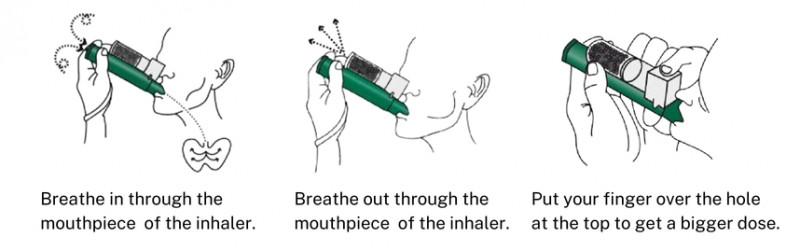

For volunteer -responders and occasion paramedics, a short certificate program suffering management straightened to PUAEME008 is often the entrance to safe experiment agents like methoxyflurane or intranasal fentanyl, relying on the service's formulary. The program needs to be blunt regarding logistics: storage space, chain of protection, wastefulness documents, and sharps security when you are working out of a kitbag in a courses in emergency pain management muddy paddock.
The composition of a strong PUAEME008 supply pain administration program
A durable discomfort administration certification course lined up to PUAEME008 tends to have five active ingredients that appear continually when you look under the hood.
- Clear mapping to the device of competency. The educational program and analyses point explicitly to the performance criteria, foundation skills, and understanding evidence in PUAEME008, so you can see where each session arrive at the framework. Scenario-heavy distribution. You invest even more time on case-based learning than on slides, with scenarios covering cracks, burns, visceral pain, and entraped clients, at minimum. Situations ought to require you to reconcile pain relief with completing concerns like airway threat or hypotension. Medication proficiency checked in layers. That suggests estimations, routes, indications, contraindications, negative effects, and rescue approaches if the first-line representative fails or causes troubles. You should show skills in more than one agent if your range allows it. Non-pharmacological discomfort monitoring incorporated, not tacked on. Splinting, cold therapy, placing, led breathing, diversion, and healing communication are installed right into situations and assessed. Documentation and handover drilled, not thought. You exercise composing pain scores, times, dosage overalls, response, and negative impacts, then handing over to a receiving medical professional utilizing structured formats.
Those 5 components do not reduce the course down, they make it efficient. You come away with muscle memory that converts to the next difficult case.
Medications that typically show up in training, and what to enjoy for
Across Australian pre-hospital setups, the regular pain administration training courses focus on a little team of representatives due to the fact that they hit a sweet place of effectiveness, familiarity, and safety. Methoxyflurane is the timeless field analgesic for moderate pain when IV or intranasal courses are not available or delayed. It is inhaled, functions quickly, and has convenient negative effects when utilized within dose limits. The watch-outs are cumulative exposure for personnel and the demand for a relatively calm breathing pattern to obtain the full effect.
Intranasal fentanyl and IV morphine are common for severe discomfort, each with their very own rhythm. Intranasal fentanyl shines when you can not get a fast IV or the client is trapped. It requires extensive dosage calculation and alert respiratory system monitoring. Morphine is a workhorse, however it does not belong in every situation. Hypotension, head injury with clinically depressed consciousness, and an inadequate airway plan must provide you stop briefly. Ketamine is progressively present, especially for injury discomfort where preserving blood pressure and respiration is important. It needs self-confidence with introduction phenomena and clear interaction with the individual and team.
Where programs fail is in showing a solitary favored pathway without context. PUAEME008 expects you to adapt to the patient before you. A frail client with a broken neck of thigh, on an anticoagulant, with borderline sats and a background of COPD, will certainly drive a various option than a young professional athlete with a gross ankle deformity and steady vitals on a completely dry soccer pitch.
Acute discomfort analysis that actually works in the field
Pain scores are needed, however not adequate. You want an approach that captures intensity, personality, and function. The 0 to 10 numeric scale remains the fastest device. The aesthetic analogue range can aid if proficiency is an issue. Encounters ranges are wonderful for kids or clients with limited English. For senior people with cognitive problems, behavioral pain scales add an additional lens, though they take practice to use well.
I educate teams to anchor the score with a straightforward practical check. What can the patient do right now that they could not do five mins ago? Move an arm or leg a few centimeters, take a much deeper breath, talk completely sentences, endure a splint. Feature correlates with significant alleviation in a way that numbers occasionally do not. It also helps when you get to a healthcare facility and hand over to an active triage registered nurse or physician. They recognize right away that the discomfort is managed enough to allow imaging or a procedure.
Balancing rate and security during emergency pain management
Speed is not carelessness. In one highway rollover, we had a client pinned at the hips with a metal strut pressing the abdomen. Chatter on the radio regarding the jaws of life expanded loud. The rescuer closest to the individual was a junior, viewing the display and worrying concerning a borderline respiratory rate. We picked intranasal fentanyl at a conventional dosage, collaborated with extrication, and trained slow breathing and grounding. The individual continued to be coherent and safety of the air passage, and we had the ability to splint and package without the mayhem that often adheres to unchecked pain.
The lesson holds across several situations. You can prioritise a quick course like intranasal or inhaled medication, after that build toward IV gain access to and added agents if needed. If the person is nauseated, deal with that early, not as a second thought. If you see indicators of opioid sensitivity, change quickly. Safety originates from preparing for where the situation might fail and preparing the following step prior to you require it.
Documentation, professional administration, and the audit trail
Training that aligns with PUAEME008 hangs out on documentation since that is where numerous medical professionals journey. You need 3 components locked: standard pain rating and descriptors, time-stamped interventions with dosages and paths, and response with any kind of unfavorable results. Recording sedation degree and breathing rate at reasonable intervals is non-negotiable when utilizing opioids or ketamine.
Why so picky? Because pain is subjective, and retrospective evaluation counts on objective anchors. In solutions that examine frequently, you see fewer complaints and a far better pattern of prompt reassessment. It also secures you. If a client later reports wooziness or memory gaps, your notes reveal the training course of treatment, the reasoning, and the safety and security checks.
Clinical administration does not quit at paper. An excellent pain monitoring certification program presses you to debrief. What did the team succeed? Where did we delay relief or overcorrect? Which interaction techniques assisted? 5 mins after a tough case can generate lessons you carry for years.
Non-pharmacologic techniques that relocate the needle
It is easy to play down non-pharmacological techniques in a discomfort administration training program because they really feel soft. They are not. Splinting done well can go down a discomfort rating by two or 3 points before the drug also begins. Appropriate placing for rib cracks or stomach pain buys you time and lowers the demand for greater doses.
Guided breathing works. I have seen an individual caught under an ATV bring their respiratory rate from 30 to the reduced 20s with basic mentoring, which steadied the distribution of breathed in analgesia. Interruption is not simply for children. Adults react to focused questions and a tranquility, positive tone. Cold treatment is reliable for fresh sprains or cracks however have to be stabilized with skin protection and the total temperature of the environment. These abilities are worthy of structured technique, not a line on a slide.
Calibrating courses for different occupations and scopes
A pain monitoring certification program can offer several audiences, but it needs customizing. For nurses, spend time on escalation across shifts and setups. How do you advocate for appropriate analgesia in a crowded department? Exactly how do you record practical goals and established expectations for review? What is your rescue strategy if the recommended regimen fails?
For physiotherapists, make room for the discomfort scientific research that matters in the severe stage. You do not need a neurobiology lecture, you need functional patterns: when discomfort is a safety signal you need to value and when it is risk-free to relocate, how to mount movement to reduce concern, and just how to team up with prescribers when pharmacological support would unlock rehabilitation.
First -responders and occasion medics require scenarios that show the turmoil of their atmosphere. Managing a dried marathon runner with serious cramping is not the like handling a motocross crash. Hydration, electrolytes, and mild extending can be restorative, however warnings for rhabdomyolysis or warmth health problem should be front of mind. PUAEME008 supply pain management leaves room for this subtlety if the program developer knows the terrain.
Building confidence with rare however crucial edge cases
Two edge cases should have specific rehearsal since they develop outsized anxiety.
The initially is the person with extreme discomfort and potential head injury. Sedation and breathing depression get worse results, yet untreated discomfort can drive thoughtful surges and agitation. Training needs to offer a path that prefers agents with very little respiratory anxiety at ideal doses, careful air passage preparation, and clear triggers for stopping or changing strategies.
The secondly is the opioid-tolerant client. Conventional doses hardly touch their pain, and rising blindly is hazardous. Right here, non-pharmacological techniques and adjuncts like ketamine at analgesic dosing can aid, but only if the clinician identifies the pattern early. In a great discomfort management training program, you will encounter this in simulation and duke it out the trade-offs, not read about it as a bullet point.
How long and exactly how deep should a training course run
People typically ask for a quick response: is a one-day discomfort monitoring training for registered nurses sufficient? It depends on the beginning factor and the extent of technique you anticipate to get to. For a medical professional already comfy with fundamental analgesia, a focused one-day workshop with pre-reading, case job, and assessment can be effective. For responders who will certainly bring and provide illegal drugs in the field, 2 days with incorporated situation time and strenuous assessment is a better baseline.
Refresher periods matter. Abilities weaken, especially under anxiety. Yearly refresher course training with circumstance updates, audit feedback, and medicine updates maintains method sharp. If your solution introduces a new agent or transforms its protocol, intend a targeted micro-course as opposed to a memo.
Choosing a provider wisely
If you are picking a pain monitoring accreditation course for a group, a structured strategy pays off.
- Ask for the mapping file. You intend to see exactly just how the educational program lines up to PUAEME008 at the element and performance criteria level. Look for teacher trustworthiness. The very best teachers can describe situations that did not most likely to plan and what altered consequently. Lived experience shows in the detail. Inspect analysis methods. You must see a mix of created expertise checks, useful skill terminals, and scenario-based analyses with documented criteria. Verify the formulary. If your solution utilizes methoxyflurane and intranasal fentanyl, however the program just educates IV morphine, the transfer of finding out will be limited. Check post-course assistance. Access to debrief, case evaluations, or brief update modules after completion will help your team translate training right into practice.
If a supplier can disappoint how they verify competence beyond attendance, maintain looking. Attendance is not competence.
Where certification fits within wider specialist development
A pain monitoring qualification program is one item of a bigger challenge. It matches scientific supervision, on-road mentoring, audit and feedback, and method updates. For registered nurses, link it to specialist growth strategies and web link to sophisticated abilities like procedural sedation or injury care where proper. For physiotherapists, incorporate it with training in severe sports injuries, hands-on therapy safety and security, and interaction skills for pain.
The reward shows up in individual experience ratings, minimized delays to imaging or procedures, and less rises because of unrestrained pain. Teams that get discomfort monitoring right also have a tendency to communicate far better, since they are utilized to establishing shared objectives and reassessing together.
Practical notes on application and risk
Courses that straighten to PUAEME008 do not run in a vacuum. Provider must construct the supporting systems. Supply management and storage for abused substances require policies that make sense in the area. Sharps disposal is easy in a health center, trickier at a celebration in the rainfall. Documents layouts ought to make it easy to capture pain ratings and treatments without scrolling through lots of areas on a tablet.
Consent and communication policies should mirror the facts of emergency situation care. You will commonly be treating individuals that are weary, scared, or distracted. Training must instruct clear manuscripts for clarifying options, dangers, and expected effects in simple language, after that checking understanding. Complaints often stem from mismatched assumptions, not scientific error.
Finally, take a look at occurrence coverage. Urge near-miss coverage for analgesia errors and close telephone calls. After that shut the loop. Show personnel what transformed after they spoke up. That is how you develop an understanding system where discomfort management enhances year certificate course in pain management on year.
Bringing everything together
Strong emergency discomfort administration is as much regarding judgment and choreography as it is about pharmacology. A well-designed pain administration accreditation course straightened with PUAEME008 gives the structure to make good choices under pressure. It sharpens your analysis, expands your toolkit, and supports your practice in processes that stand up to audit and lived complexity.
Whether you are looking for a discomfort administration certification to satisfy a solution demand or developing an educational program for a combined team, keep view of the basics. Educate the medicine skills, certainly, however installed them in circumstances that feel like genuine days on duty. Make non-pharmacological strategies second nature. Pierce documentation and handover up until they are smooth. Dressmaker content to the extents of registered nurses, physio therapists, and responders without watering down the core. When you do, the benefits show up quick, not just in individual convenience yet also in the confidence and communication of the teams providing care.
Good discomfort management training makes its keep the day a regular telephone call takes a hard turn. An entraped limb, a deteriorating airway, a distraught relative asking tough concerns. Because moment, the hours invested aligning your discomfort monitoring qualification training course with PUAEME008 are not simply a line on a certificate. They are the difference between a scramble and an exercised plan, in between avoidable suffering and competent relief.